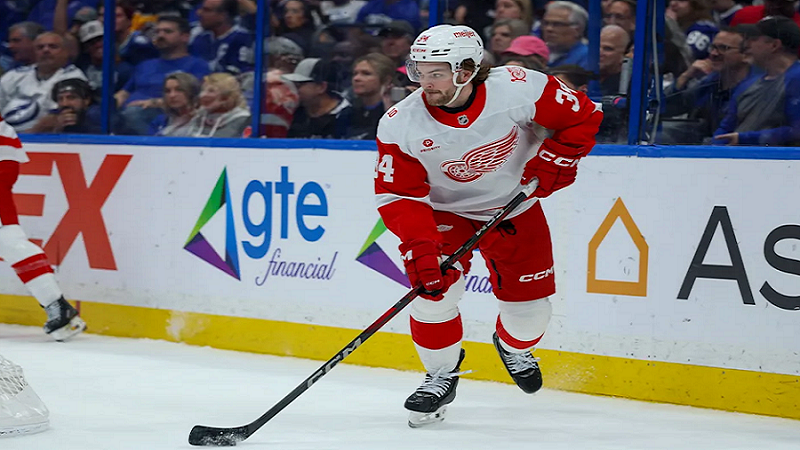
Rebuilding a fallen hockey dynasty requires patience that fan cultures built around championship expectations find genuinely difficult to sustain. The Detroit Red Wings spent over two decades as the NHL’s gold standard — the streak of consecutive playoff appearances, the championship hardware, the organizational culture that turned Detroit into hockey’s most consistently excellent franchise — before the inevitable rebuild that follows any dynasty’s conclusion. The current chapter involves genuine prospect talent, a front office committed to doing the rebuild correctly rather than quickly, and a goaltending prospect in Sebastian Cossa whose development has become the single most discussed element of where Detroit’s competitive future is heading. Fans following NHL action with dedicated markets can find comprehensive coverage at Dbbet.
Detroit Red Wings: A Dynasty in Rebuilding Mode
The Detroit Red Wings dynasty that produced four Stanley Cup championships between 1997 and 2008 — alongside the extraordinary 25-consecutive-season playoff appearance streak that ended in 2016 — set standards against which every subsequent Detroit roster is inevitably and somewhat unfairly measured. The players who built that dynasty, Steve Yzerman, Nicklas Lidstrom, Henrik Zetterberg, Pavel Datsyuk, and the coaching infrastructure beneath them, created an organizational culture that made winning feel structural rather than circumstantial. Yzerman’s return as general manager — the franchise’s greatest captain now responsible for rebuilding the organization that defined his playing career — adds a specific narrative dimension to Detroit’s rebuild that extends beyond roster construction into questions about whether the qualities that made him exceptional as a player translate into the organizational leadership required to restore championship relevance.
The Development Timeline: What Rebuild Actually Means
Rebuilding in the NHL — particularly for a franchise with Detroit’s championship history — involves accepting a competitive timeline that results-focused fan engagement finds genuinely uncomfortable. The process requires drafting high in multiple consecutive years, developing prospects through the AHL and junior levels with patience rather than accelerating their development by exposing them to NHL competition before they are ready, and building the organizational depth that sustains competitive quality across the injuries and roster fluctuations that an 82-game season inevitably produces. Detroit’s rebuild under Yzerman has followed this philosophy with more discipline than the pressure of a passionate fanbase might suggest was politically easy to maintain. The prospect pipeline that has developed across the rebuild’s middle years is now producing NHL contributors whose quality suggests the competitive window is approaching without having been artificially accelerated in ways that would compromise long-term organizational health.
Sebastian Cossa: The Goaltending Prospect Changing Detroit’s Outlook
Sebastian Cossa entered Detroit’s rebuild conversation as a first-round pick — selected 15th overall in 2021 — whose physical dimensions, athleticism, and technical foundation generated the kind of goaltending prospect evaluation that organizations building toward championship contention require. Goaltending development timelines are among hockey’s most unpredictable — the position’s specific technical demands, the mental requirements of performing under pressure as the last line of defense, and the time required for young goaltenders to develop the reading and positioning skills that compensate for the physical gifts that raw athletic assessment identifies — mean that prospect goaltenders who project as future starters frequently require longer development periods than comparably rated position player prospects. Cossa’s development through the Edmonton Oil Kings, the World Junior Championships where his performances drew significant attention, and his AHL progression has provided the competitive evidence that supports Detroit’s organizational confidence in his eventual NHL readiness.
What Makes Cossa’s Game Project as Elite
Goaltending evaluation at the prospect level requires assessing qualities that raw statistics across junior and minor league competition cannot fully capture. Cossa’s physical profile — size that provides natural coverage of the net’s corners combined with athleticism that allows recovery positioning without the rigidity that larger goaltenders sometimes develop — provides the foundation that coaching can develop rather than needing to compensate for. His competitive demeanor — the ability to reset after goals-against with the composure that NHL goaltending demands across an 82-game season where bad nights are statistically inevitable — has been specifically noted by evaluators who distinguish between technically refined prospects and those who combine technical quality with the psychological profile that sustained NHL performance requires. The movement efficiency that his skating foundation provides — getting into position with minimal wasted effort — reflects coaching-responsive technique rather than instinctive athleticism that resists refinement.
Detroit Red Wings Trade Rumors: Managing Expectations and Assets
Detroit red wings trade rumors across the rebuild period have reflected the specific tension that competitive rebuilds create — between patience with the developmental timeline and the temptation to accelerate through asset acquisition that compromises long-term organizational health. Yzerman’s approach has been notably disciplined in resisting trades that would convert future assets into present competitiveness before the roster’s developmental foundation justifies the acceleration. The trade rumors that generate most discussion involve the typical rebuild-phase decisions — whether to move veterans whose value peaks before the prospect pipeline matures into the roster positions they occupy, whether to acquire specific complementary pieces that address identified gaps without disrupting the developmental timeline, and how to manage the salary cap implications of re-signing developing players whose value the team has created but whose market value the competitive bidding for their services will ultimately determine.
The Prospect Pipeline Beyond Cossa
Detroit’s rebuild has produced a prospect pipeline whose depth extends well beyond Cossa’s goaltending development into the position player talent that any championship-caliber roster requires. The forward group has been strengthened through drafting that prioritized hockey sense and two-way capability alongside the offensive talent that casual prospect evaluation emphasizes. The defensive prospect depth — the ability to develop defensemen capable of contributing to both ends rather than simply adding offensive defensemen whose one-dimensional value limits their deployment — reflects organizational priorities around defensive structure that Yzerman’s playing experience informed. AHL Grand Rapids — the organization’s primary development affiliate — has been competitive in ways that reflect the pipeline’s quality rather than simply providing NHL-adjacent competition for players whose development trajectories are unclear.
The Little Caesars Arena Experience and Detroit’s Hockey Culture
Little Caesars Arena — Detroit’s home since 2017 — represents the modern facility investment that championship-caliber franchises require to compete commercially with the NHL’s strongest markets. The arena’s downtown Detroit location reconnects hockey to the urban core in ways that the former Joe Louis Arena’s waterfront isolation limited — integrating the team’s home into Detroit’s broader entertainment district creates the game-day ecosystem that drives the commercial revenue supporting competitive roster investment. Detroit’s hockey culture runs generational depths that franchise performance in recent years has tested without eliminating — the city’s relationship with Red Wings hockey is too historically embedded to be dissolved by a rebuilding period, but sustained competitive relevance is required to convert cultural loyalty into the attendance and commercial engagement that funds the organizational investment the rebuild requires.
What a Competitive Timeline Looks Like for Detroit
Projecting Detroit’s competitive timeline requires assessing when the prospect pipeline’s NHL contributors will simultaneously reach their competitive peaks — the specific organizational circumstance where the young talent developed through the rebuild is performing at its highest level while the supporting veteran infrastructure is still capable of championship-caliber contribution. Cossa’s goaltending development reaching NHL starter readiness is one critical variable. The forward prospects developing into consistent point producers is another. The defensive core maturing into the two-way reliability that playoff hockey demands is a third. These variables do not develop on identical timelines, which is why rebuild completion rarely feels as sudden as the competitive emergence that follows it — the pieces reach readiness at different moments, and the championship window opens when enough of them align simultaneously to produce a roster whose collective quality the competition cannot consistently overcome.
Why the Red Wings Rebuild Matters to Hockey’s Broader Narrative
Detroit’s path back to championship relevance carries significance for the NHL’s competitive landscape that extends beyond one franchise’s organizational ambitions. The Red Wings’ sustained excellence across the salary cap era — winning championships while operating within the financial constraints that were supposed to prevent dynasties — demonstrated organizational qualities that influenced how every competitive front office thought about roster construction, player development, and long-term competitive planning. A successful rebuild that returns Detroit to the playoff picture and eventually to championship contention would confirm that organizational excellence can be rebuilt rather than merely inherited — that the qualities which produced one dynasty can be reconstructed through patient, disciplined work rather than requiring a generational accident of talent accumulation that cannot be deliberately engineered. For a sport whose competitive balance the salary cap was designed to encourage, Detroit’s rebuild story is worth following regardless of which team you support.