The 2016/17 Ligue 1 season offered several cases where teams produced enough chance quality to justify more goals than they actually scored. From a statistical angle, those clubs were not just unlucky on the day; they formed a specific profile that often points toward a coming rebound in form rather than a collapse in attacking ability.
Why xG underperformance can signal a rebound
Expected goals turn the vague idea of “they should have scored” into something that can be measured over an entire season. When a team’s non-penalty xG consistently exceeds its goal tally across many matches, the gap suggests that finishing has lagged behind the quality of chances being created.
In most cases, finishing is more volatile than shot creation, so the process that produces xG tends to be more stable than the final conversion rate. That means a team whose xG surpasses its actual goals over 2016/17 is more likely to see the goals catch up to the chances in later samples than to remain permanently wasteful if the attacking structure stays intact.
How to locate Ligue 1 2016/17 xG underperformers
To find candidates in Ligue 1 2016/17, analysts often start with historical databases that track both goals and expected goals for each club. These records combine traditional tables, which show points and goals, with xG-based league tables that approximate how many goals each side “should” have scored based on shot location and type.
Once both sets of numbers are available, the key metric becomes the difference between xG and actual goals over 38 matches. Teams with a positive gap—more xG than goals—are marked as underperformers in attack, and those with particularly large gaps attract interest because they embody the “lots of chances, not enough goals” pattern in its most extreme form.
Typical team profiles behind the 2016/17 gaps
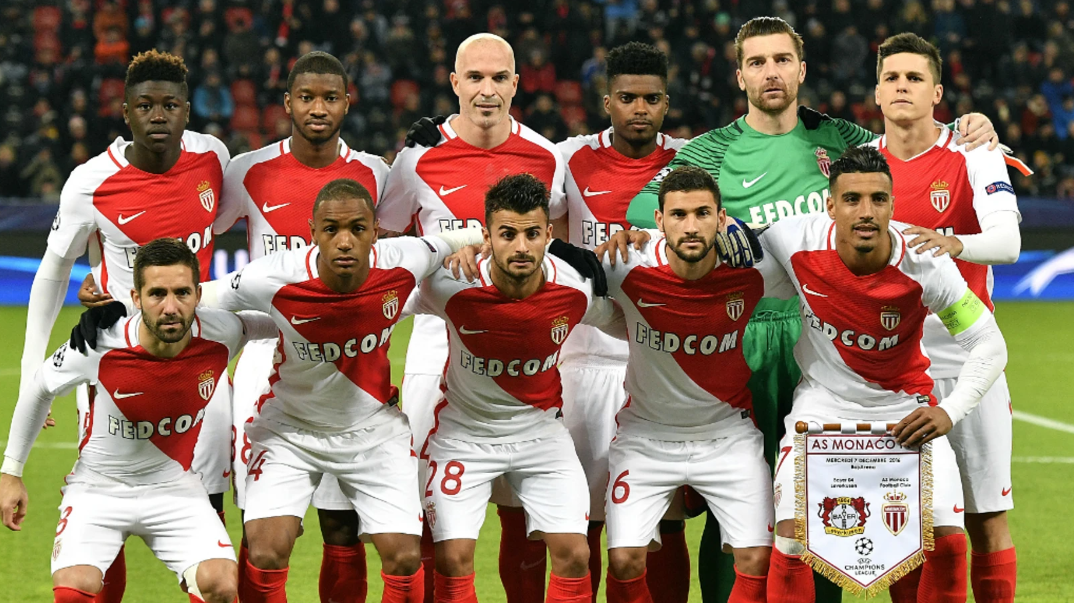
Although Monaco, Paris Saint-Germain, and Lyon grabbed attention at the top of the table, the more interesting rebound stories often came from clubs lower down. Historical standings show mid-table and lower-top-half sides that maintained respectable offensive volume yet finished the season without a goal tally that fully reflected their xG.
These teams often shared a similar profile: they pressed reasonably high, generated crossing situations or combination play around the box, and accumulated enough shots to suggest a functional attack. The problem was that the conversion of those chances lagged behind the underlying process, either through streaky finishing or through an imbalance in shot selection that tilted heavily toward medium-probability attempts.
Mechanisms that produce xG > goals
The gap between xG and goals in Ligue 1 2016/17 rarely came from a single cause; it usually resulted from several factors interacting across the season. Strikers and attacking midfielders experiencing unusually cold finishing spells contributed to underperformance, but so did tactical shapes that created plenty of half-chances rather than frequent clear one-on-ones.
Another mechanism was game state and match context. Teams that often trailed and pushed late for an equaliser sometimes piled up xG in short bursts against deeper opposition blocks, only to miss the final touch, leaving them with a statistical profile rich in chance quality but poor in actual scoring. Over 38 matches, this pattern showed up as sustained xG, unremarkable goal tallies, and the appearance of a team that might be “due” for better results.
Conditional scenarios for future outcomes
Conditionally, the expectation of a rebound depended on whether the underlying patterns remained in place. If a coach, key playmakers, and main shooters stayed with the club and the tactical identity remained similar, analysts had stronger grounds to expect the xG-to-goals gap to narrow. By contrast, if the club changed systems or lost its creative hub in the following campaign, the previous xG underperformance offered less guidance.
In other words, xG > goals in 2016/17 only pointed toward a rebound when the future context resembled the environment that produced the original numbers. Without that continuity, the statistical story turned from “they will catch up” into “they once underperformed, but everything around them has shifted,” weakening the predictive power of the earlier gap.
Using lists to understand the ingredients of a rebound profile
To clarify the concept further, it helps to break the rebound-friendly profile into separate ingredients and then interpret why they matter. Each item describes an observable trait that tends to increase the probability that an xG underperformer will eventually see its goals move closer to its expected output once variance normalizes.
- Consistent shot volume across many matchdays, not just in a small cluster of fixtures.
- Stable xG per match against a wide range of opponents, home and away.
- A core of attackers with historically average or better finishing records.
- Tactical patterns that repeatedly access central shooting zones rather than only wide or long-range areas.
- Limited turnover in coaching staff and key attacking roles between seasons.
When these traits appear together, the gap between xG and goals looks more sustainable as a predictor of future improvement because the structure creating the chances remains intact. Conversely, if a team’s underperformance comes from a brief burst of missed penalties or a tactical experiment that is quickly abandoned, the list above does not apply, and the original gap says far less about what will happen next.
How bettors framed these teams in a value-based context
From a value-based betting perspective, Ligue 1 2016/17 xG underperformers were interesting not because they were guaranteed to improve, but because markets often priced them as if finishing slumps were permanent. Historical odds archives and match records from that season show that a team on a streak of low-scoring results might still be generating healthy xG, pushing their prices out in win or goals-related markets while the underlying process remained robust.
The cause–effect chain here is subtle: poor recent scorelines hurt public perception, perception shapes demand, demand influences odds, and those odds sometimes drift away from what a purely data-driven model would expect. In that space between narrative and numbers, the xG-underperforming side could present a temporary pocket of value for bettors willing to trust process over short-term outcomes.
UFABET and timing decisions around xG gaps
When those same ideas were applied in practice, timing became crucial, especially for bettors using an established สมัคร ufabet168 betting destination to engage with Ligue 1 fixtures. The decision was rarely a simple “back all xG underperformers”; instead, the more sophisticated approach combined the bookmaker’s prices with privately tracked xG differentials from 2016/17, looking for matches where the odds implied that a team’s finishing woes would continue indefinitely, even though its chance creation had not deteriorated, thus turning statistical underperformance into a controlled, repeatable angle rather than a blind leap of faith.
This connection between numbers and pricing ensured that the xG information had a direct impact on staking decisions: it narrowed the set of matches worth attention, gave structure to the idea of “waiting for a rebound,” and reduced the temptation to chase narratives without an underlying statistical foundation.
How casino online framing changes the risk discussion
In a broader casino online context, where different football markets coexist with other games of chance, xG-based reasoning serves more as a risk management tool than as a shortcut to profit. The presence of underperforming teams with strong xG in the 2016/17 Ligue 1 data demonstrates that some edges arise from misaligned perceptions, but it also highlights that variance remains a central feature of any single match.
By distinguishing between teams whose poor results mask solid attacking foundations and those whose numbers reflect deeper limitations, a bettor can at least avoid the most obvious traps of recency bias. The impact of that distinction is not eliminating uncertainty but shifting the balance slightly toward situations where the underlying data and the price offered move in opposite directions.
Summary
The idea that “xG higher than actual goals” in Ligue 1 2016/17 could point toward rebound candidates is grounded in the relative stability of chance creation compared with finishing. Teams that sustained good xG across the season while scoring less than expected embodied a process–outcome mismatch that typically narrows over longer horizons when tactics and personnel remain stable.