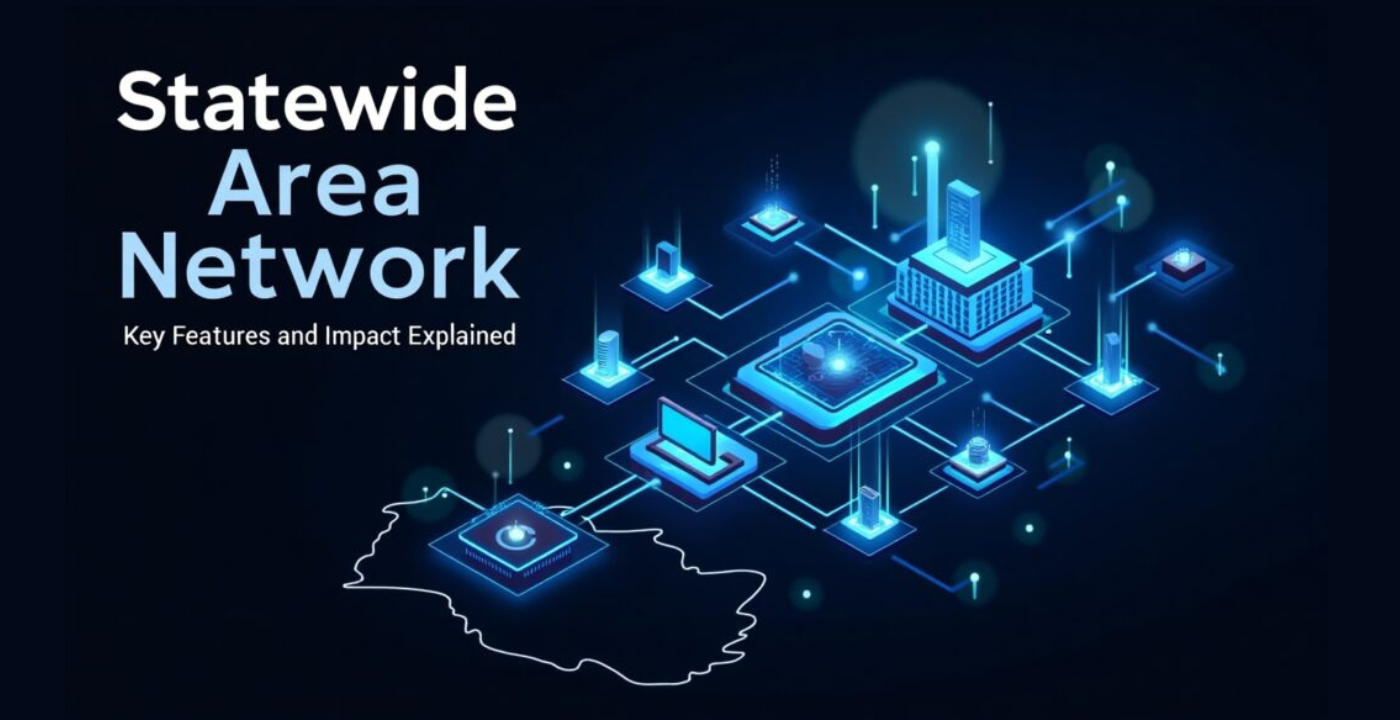
A Statewide Area Network, or SWAN, is basically a private internet built just for the government. It connects all government offices across a state, from the big secretariat in the capital down to tiny block offices in villages — so they can talk to each other, share files, hold video meetings, and run online services without relying on public internet.
It started back in 2005 under India’s National e-Governance Plan. The idea was simple: you can’t digitize government services if the offices can’t even connect. Today, every state and union territory has one.
How It Actually Works
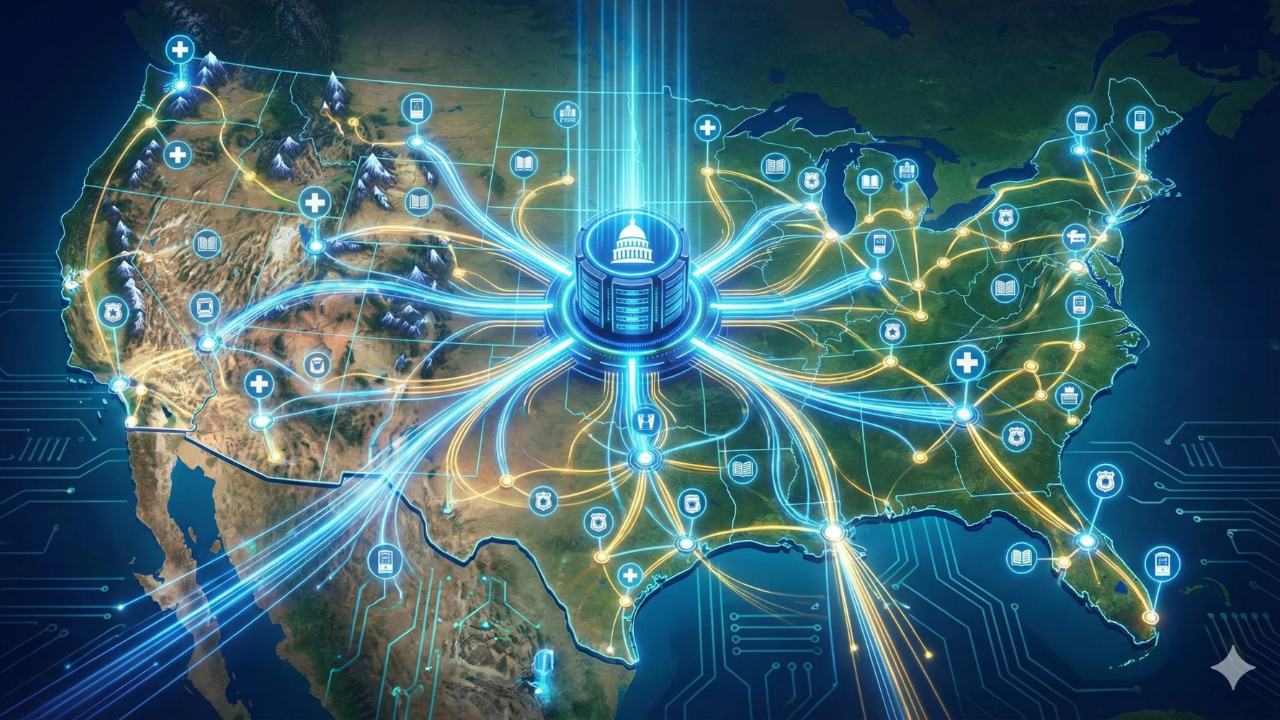
Picture a tree. The trunk is the state capital. The branches are district headquarters. The leaves are block-level offices in towns and villages.
Vertical connectivity runs top to bottom using fiber-optic cables or leased lines. This is the backbone — the main highway carrying data between state, district, and block levels.

Horizontal connectivity spreads sideways at each level. So at a district headquarters, the police, revenue, health, and treasury departments all plug into the same node. They can share data without anyone leaving the network.
Points of Presence (PoPs) are the connection hubs. In a big state like Madhya Pradesh, there are around 380 of these scattered around. Each PoP is a small room with routers, switches, and backup gear serving nearby government offices.
The Tech Behind It
No single technology works everywhere. A flat state like Gujarat has lots of fiber. A Himalayan state uses satellite and radio for the mountains. Here’s the typical mix:
- Optical fiber: for cities and towns, fastest and most reliable
- Leased circuits: dedicated lines where guaranteed bandwidth matters
- VSAT (satellite): for remote villages where cables can’t reach
- Radio frequency: for hilly or tough terrain
- Ethernet / DSL: cheap backup options
Bandwidth starts at 2 Mbps for small offices but can go up to 1 Gbps for heavy users like state treasuries.
Read Also: GlobeInsightBlog: A Complete Overview of Features, Content and Legitimacy
How States Build It
There are two main approaches:
Public-Private Partnership (PPP): A private company builds and runs the network for about 5 years, then hands it over to the government. This is cheaper upfront and brings in private expertise.
NIC-led model: The government’s own tech agency, the National Informatics Centre, handles the design and hires private help only for day-to-day maintenance. More control, but it needs government funding.
What Makes It Different from Regular Internet?
A SWAN isn’t just a bigger version of the internet you use at home. Here’s the difference:
| Feature | SWAN | Regular WAN |
| Purpose | Government services only | General business use |
| Security | Closed private network from day one | Varies by company |
| Coverage | One state, end to end | Can be any size |
| Services | Voice, video, data all together | Usually just data |
| Oversight | Government audits mandatory | Up to the owner |
Think of the public internet like a busy highway anyone can use. A SWAN is a dedicated expressway fenced off just for government vehicles, monitored 24/7, with no random traffic allowed in.
Real Benefits for Real People
You never log into a SWAN directly, but you use what it carries every day:
- Online certificates: birth, death, caste and income certificates processed without visiting offices multiple times
- Faster welfare delivery: pensions, ration cards and scholarships get verified and disbursed quicker because block offices connect straight to state databases
- Less travel for officials: a district magistrate can attend state meetings via video instead of driving five hours to the capital
- Better decisions: when police, revenue, and health departments share data, disease outbreaks get caught faster, land fraud gets harder and tax evasion gets spotted
- Disaster response: when floods or cyclones hit, backup links keep coordination channels open even if regular phone networks fail
The Headaches Nobody Talks About
It’s not all smooth sailing:
- Money: Laying fiber, buying satellite bandwidth, setting up hundreds of PoPs — it costs crores. Small states with tight budgets struggle to keep up.
- Terrain: Building networks across the Himalayas, deserts, or tribal belts is way harder than in flat cities. Rocks, rivers, and a lack of roads make cable-laying slow and expensive.
- Cybersecurity: Firewalls from five years ago might be outdated today. State IT departments are often understaffed to handle modern attacks.
- Maintenance at scale: With hundreds of PoPs and thousands of offices, something breaks daily. Keeping spare parts and trained technicians everywhere is a logistics nightmare.
- Vendor problems: If the private operator in a PPP model underperforms or goes bust, the state gets stuck scrambling for alternatives.
Where Things Are Heading
SWANs keep evolving as India’s digital push grows:
- Higher speeds: 4G/5G backhaul and better fiber are pushing bandwidth up and costs down
- Cloud integration: more government apps are moving to the cloud and SWANs are adapting to connect securely
- Smart infrastructure: traffic sensors, agricultural monitoring, and other machine data are starting to ride these networks too
- Better disaster backup: post-pandemic, there’s more focus on redundant paths and backup data centers
Final Word
A SWAN isn’t glamorous tech. You won’t read about it in gadget blogs. But it’s the invisible backbone that makes modern governance actually work.
Without it, a district collector can’t video-call the chief secretary. A village office can’t verify a pension in real time. A farmer can’t get his caste certificate printed at the local service center. During a disaster, rescue teams can’t coordinate.
It costs money, faces real technical problems, and needs constant security updates. But when done right, it turns a slow, paper-heavy government into something that can move fast, stay secure, and actually reach citizens where they live — whether that’s a city high-rise or a remote mountain village.
Read More: How to Stop Car From Fogging Up: 8 Simple Hacks Every Driver Should Know